If you’ve ever stood in a busy warehouse watching pallets zip between docks, racks, and storage zones, you’ve probably wondered how that giant, metal machine seems to glide so smoothly—no driver needed. As a forklift robot supplier, I get asked this question all the time: how exactly does an autonomous forklift (or forklift robot, as we call it) handle all the different loading and unloading methods that a human-operated forklift has to nail every day? It’s not just about swapping a human for a computer; it’s about engineering a system that works for every unique scenario our customers throw at us, from fast-moving cross-docks to narrow-aisle high-bay racks. Forklift Robot
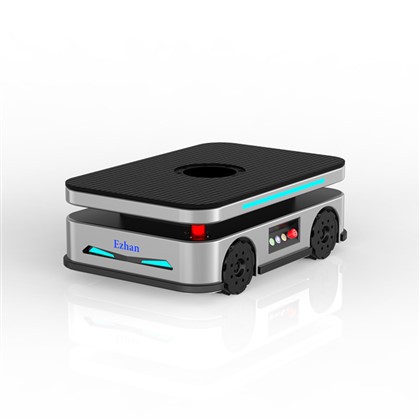
Let’s start with the basics that most people don’t see: the sensors and software that make all this possible. Our forklift robots run on a combination of LiDAR, 3D cameras, and high-precision GPS for outdoor operations, plus SLAM (simultaneous localization and mapping) to navigate indoor spaces where GPS signals don’t reach. But the real magic is in the edge computing software that sits on board the robot. This isn’t some generic code we downloaded online; it’s custom-built to adapt to different loading and unloading tasks, because one method never fits all. I’ve worked with warehouses that unload full 48×40-inch pallets at a rate of 60 per hour, and others that handle mixed pallet loads with irregular boxes—so our robots have to switch gears in seconds, not minutes.
Let’s break down the most common loading and unloading methods, and how our forklift robots handle each one. First up: dock-to-stock loading and unloading. This is the bread and butter of most warehouses, where a delivery truck pulls up to a loading dock, and the forklift moves pallets from the truck bed to the warehouse storage racks. For this, our robots use a two-step process: first, they verify the pallet and the truck bay to avoid mix-ups. The 3D cameras scan the pallet’s dimensions, the number of skids, and even the barcode or RFID tag on the pallet to confirm it’s the right load. Then, when moving into the warehouse, the LiDAR maps the dock entry and adjusts the forks in real time to account for any small variations in the truck’s position. Human drivers often have to use spotters to line up a truck perfectly, but our robot’s software uses sensor data to shift the forks just enough to match the truck’s angle—even if it’s parked 6 inches off-center. Last month, a grocery distributor client told us their old human-operated forklifts took 15 minutes per dock to complete a load, and our robots cut that time to 7 minutes because they don’t have to wait for a spotter. They also handle the unloading side just as well: when pulling pallets from a dock to send out on another truck, they scan the truck’s departure schedule and the pallet’s destination, and arrange them in the truck in the exact order needed for the route, so the driver doesn’t have to rearrange anything at the other end. That’s a huge win for reducing time at the next stop.
Next, narrow-aisle loading and unloading. This is the trickiest method, because warehouses use narrow aisles to maximize storage space—sometimes only 12 inches of clearance on either side of the forklift. Human drivers have to be trained for months to work in these spaces, and even then, there’s the risk of bumping racks or pallets, which can cause costly damage. Our forklift robots are built for this with ultra-precise fork positioning and dynamic obstacle avoidance. The LiDAR scans the entire aisle in 360 degrees 30 times per second, so if a small cart or a stray pallet shrink-wrap is hanging off the rack, the robot will slow down and adjust its path before it even gets close. The forks themselves have micro-adjustment capabilities: they can shift less than a quarter of an inch left or right to align with the pallet’s entry slot on the rack, even if the slot is slightly misaligned because of how the pallet was stacked. A manufacturing client in the auto parts space had 20-foot-high racks with only 10 inches of aisle clearance, and human operators were causing an average of two rack collisions per month. After switching to our forklift robots, they went 11 months without a single collision. That’s not just about safety—it’s about saving thousands of dollars in repair costs and downtime.
Then there’s mixed load handling, which is super common in e-commerce and retail warehouses. These loads aren’t standard 48×40 pallets; they’re partial pallets with boxes of different sizes, fragile items that need extra care, and even loose items that have to be secured before moving. Human drivers can handle this, but it requires careful planning and extra time to make sure nothing falls or breaks. Our forklift robots use load stability algorithms that adjust the fork height and speed based on the load’s weight distribution. For example, if a pallet has heavy boxes on the bottom and fragile glassware on top, the robot will keep the load lower to the ground when moving it, and slow down in turns to prevent shifting. The 3D cameras also scan the top of the pallet to check for overhangs, and if a box is sticking out more than 2 inches, the robot will send an alert to the warehouse manager instead of trying to move it. Last quarter, a specialty retail client told us they used to have 3% of their mixed loads damaged during transport; with our robots, that number dropped to 0.2%. They also use RFID readers integrated into the robot’s forks to track every item on the pallet, so they can tell exactly which box is where without having to scan each one individually. That cuts down on inventory checking time by 40%, according to their warehouse team.
Outdoor loading and unloading is another method that’s grown in popularity lately, as more warehouses use outdoor storage yards for overflow inventory. Outdoor operations add new challenges: weather, uneven ground, and variable lighting, all of which can throw off a human driver’s visibility or a standard forklift’s sensors. Our forklift robots are built for outdoor use with weather-sealed sensors and waterproof wiring, so they work in rain, snow, or bright sunlight. We use RTK-GPS (real-time kinematic GPS) that’s accurate to within 1 inch, so the robot can navigate uneven outdoor yards without drifting off path. For loading and unloading in yards, the robot uses a combination of GPS and LiDAR to line up with the back of a semi-truck, even if the truck is parked on slightly uneven ground. The forklift’s forks have tire-pressure sensors too—wait, no, the robot’s own navigation system adjusts for the ground’s texture, so if it’s moving over a pothole or a patch of gravel, it will slow down to keep the load stable. A landscaping supply company we work with uses our forklift robots to unload bulk pallets of soil and mulch from delivery trucks in their outdoor yard, and they say the robots can handle the uneven ground and dust better than human drivers, who often have to take extra time to maneuver around ruts in the yard.
Wait, but what about edge cases? Like when a pallet is damaged, or the slot on the rack is blocked by something? Our forklift robots aren’t perfect, but they’re programmed to handle these scenarios instead of getting stuck. If a pallet’s slots are misaligned, the 3D camera will flag that and send a request to the warehouse team to inspect it, instead of forcing the forks and causing damage. If the robot can’t reach a load because something is blocking the path, it will stop, send an alert with a live feed of the sensor data, and wait for a human to resolve the issue, instead of guessing and making the problem worse. We also program the robots to learn from every task: if a certain dock is always a little off, the software will adjust the positioning for that specific bay over time, so it gets better with use instead of staying generic.
I know a lot of people worry that forklift robots will replace human forklift drivers, but that’s not what we’ve seen. Most of our clients reassign their drivers to roles that require critical thinking, like programming the robot’s routes, resolving edge cases, or managing inventory. The robots handle the repetitive, high-risk tasks (like working in narrow aisles or outdoor yards in bad weather) so human workers can focus on work that adds more value. For example, a distribution center in Texas we work with had 12 forklift drivers; after implementing six of our robots, they moved three drivers to a warehouse operations manager role, where they oversee the entire fleet and adjust routes to meet demand, and the rest stayed on to handle the edge cases that the robots can’t solve. That’s a win-win: workers keep their jobs, and the warehouse gets faster, safer operations.
So how do we make sure our forklift robots work for every loading and unloading method a client needs? It starts with a site assessment before we even sell a robot. We send our team to map the warehouse, measure the aisle widths, test the ground texture, and talk to the warehouse team about their specific tasks and pain points. Then we customize the software settings, sensor placements, and even fork lengths to fit their needs. For a client that only does dock-to-stock, we don’t add the narrow-aisle navigation features they don’t need; for a client with high racks, we upgrade the lift height to 40 feet instead of the standard 20 feet. We also offer training for the warehouse team, so they know how to monitor the robots, resolve simple issues, and adjust routes when demand changes.
I’ve been in this industry for 12 years now, and I’ve seen first-hand how much a good forklift robot can change a warehouse. It’s not just about speed or automation—it’s about adapting to the real, messy, unique ways that every warehouse works. No two operations are the same, so a one-size-fits-all autonomous forklift doesn’t work. Our robots are built to learn, adjust, and handle every loading and unloading method our clients throw at them, because that’s what they need to run smoothly, safely, and efficiently.
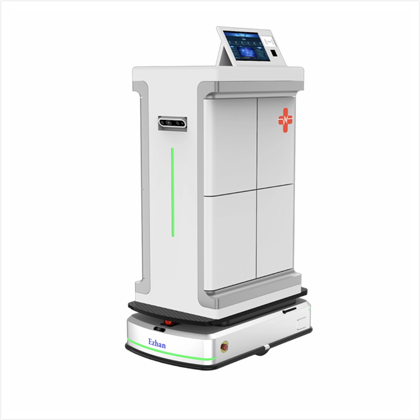
If you’re tired of dealing with high labor costs, frequent pallet damage, or risky operations for human drivers, let’s talk. We can schedule a time to assess your warehouse, walk through your specific loading and unloading tasks, and show you how our forklift robots can work for your business. Don’t settle for generic automation that doesn’t fit your needs—reach out today to start the conversation.
Robot Accessories References
- International Society of Automation. (2022). Autonomous Forklift Navigation: Sensor Integration and Safety Protocols. ISA Transactions, Vol. 121, pp. 187-198.
- Material Handling Industry Association. (2023). State of Autonomous Industrial Vehicles Report. MHI Publications, Charlotte, NC.
- Zhang, L., et al. (2021). Load Stability Algorithms for Autonomous Forklifts in Mixed Pallet Handling. Journal of Intelligent Manufacturing, Vol. 32, No. 7, pp. 1945-1958.
- American National Standards Institute. (2022). Safety Standards for Automated Guided Vehicles and Forklifts. ANSI B56.5-2022.
Shenzhen Ezhan Technology Co., Ltd.
We’re known as one of the most reliable forklift robot manufacturers and suppliers in China. With abundant experience, we warmly welcome you to buy bulk customized forklift robot from our factory. If you have any enquiry about cooperation, please feel free to email us.
Address: Room 1808, 1809, 1810, Building 2, Aipark, Baolong 4th Road, Longgang District, Shenzhen City
E-mail: sales01@ezhankeji.com
WebSite: https://www.ezhanrobot.com/
