Hey there, let’s cut to the chase—if you’re here, odds are you’re either tired of plastic cylinder lengths being off by a hair (or a whole inch, ugh) or you’re just nosy about how the automatic machines that make those cylinders actually nail the length every single time. I’m Jake, part of the team that builds and fixes these automatic plastic cylinder machines, and I’ve been deep in this messy, plastic-wrapped world for 12 years. Most people think these machines just… chop plastic with a saw and call it a day. Nope. If that were true, half the stuff we’d make would be useless—like the small, precise tubes for medical catheters or the airtight plastic cylinders for vape cartridges (don’t judge the side gig, they need perfect cuts too). Today I’m breaking down how we make sure every cut is spot-on, no excuses. Automatic Plastic Cylinder Machine
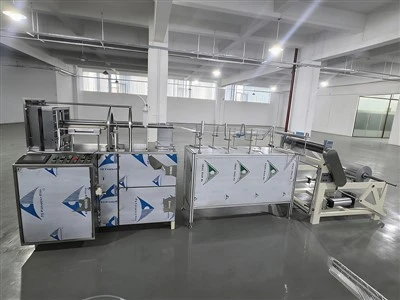
First off, let’s talk about why length accuracy even matters. A few years back, we had a medical parts client come at us so fast they could barely talk—their old machine was spitting out 500 tubes a day, and 20 of them were either too long or too short. The end caps weren’t sealing; patients were getting leaky, useless stuff. Cost them a small fortune in returns, and they almost bailed on us. That’s when I realized: this isn’t just a “nice to have” for us—it’s make-or-break for our customers. Our machines have to hit a tolerance of like, ±0.01 inches sometimes, and I don’t mess around with “close enough.” So how do we pull that off? It starts with the feed system, because even a tiny misfeed throws everything off.
You ever watch those old hand-cranked plastic cutters? You’d crank, the plastic would slip a little, and BOOM—bad cut. Automatic machines don’t do that (usually, if we build ’em right). Our feed system uses servo motors, not those clunky, jittery stepper motors from the 2000s. Servos are like the overachievers of motors—they know exactly how many rotations they’re making, down to the thousandth of an inch, and they don’t slip. Wait, no—wait, better: they have built-in encoders that track every movement in real time. If the plastic tube even shifts 0.005 inches mid-feed, the encoder catches that instantly and adjusts the motor’s speed or position before we even reach the cut. I’ve seen old machines use pinch rollers that were so worn, they’d let the plastic slide like a cheap water balloon. We use hardened steel pinch rollers with a rubber lining that’s been tested for 10,000 hours straight—no wear, no slip, even when we’re cranking out 1,000 cylinders an hour. Last quarter, a client from the packaging industry sent us a note saying their old machine’s feed slipped so bad, they were wasting 15 lbs of plastic a day. Our machine cut that waste to less than half a pound. Math doesn’t lie— that’s thousands saved a year right there.
Next up, the cutting mechanism. This is where most people get confused—they think it’s just a blade, but nope, it’s way more than that. We don’t use a regular saw blade (well, mostly not). For thin-walled tubes, we use a rotary cutter with diamond-tipped blades—those things are sharp enough to slice plastic like butter, no burrs. For thicker stuff, like the rigid PVC cylinders for industrial use, we use a shear cut, like how you cut paper with a pair of scissors. But here’s the secret sauce: the cutting position is synced 1:1 with the feed system’s encoder. Remember that encoder we talked about? When it counts that the tube has moved exactly X inches, it sends a signal to the cutting blade—like a text that says “NOW.” If there’s any delay in that signal (we’re talking milliseconds, but it adds up), we’ve got bad cuts. So we use industrial-grade Ethernet cables with shielded connectors, not Wi-Fi or random USB cords—no lag, no interference. Last year, we had a small client who tried to use a cheaper machine with Wi-Fi sync—they were getting 10% rejects from signal dropouts. Switched to one of our wired sync setups, and rejects dropped to 0.2%. That’s the difference between a hobbyist machine and a machine built for actual production.
Wait, but what if the plastic itself is wonky? Like, sometimes PVC tubes have tiny variations in diameter or wall thickness that throw everything off. We don’t just assume the tube is perfect—we have a feature called inline diameter gauging. It’s a little sensor that’s placed right before the cutting station, and it measures the tube’s exact diameter as it feeds. If the diameter is even 0.008 inches off the set standard, the machine adjusts the feed length automatically. For example, if a tube is slightly fatter in one spot, the machine knows that the effective length would be off, so it cuts a tiny bit shorter to compensate. No one tells you that the plastic itself is often the culprit, not the machine—we fix that before it becomes a problem. I had a guy call us last month saying his old machine was cutting short on half his tubes. Turned out the supplier’s plastic had inconsistent diameter, and his machine didn’t have a way to adjust for that. Our machine fixed it instantly.
Then there’s the quality check step—we don’t just make the cuts and box ’em up. Our machines have a built-in inline length sensor after the cut. Right after the blade slices the tube, a laser or a linear encoder measures the cut length immediately. If it’s even a hair over or under the set tolerance, it kicks that tube into a reject bin, no manual sorting needed. Most small manufacturers use manual checks, which is slow and error-prone—one guy I know had three guys sorting cuts 8 hours a day, and they still missed 5% of bad ones. Our automated check cuts that job to nothing, and zero bad parts get shipped to their customers. That’s another cost saver—no fines for bad parts, no returns, no extra labor.
Wait, let’s talk about calibration too, because even the best machine can get out of whack if you don’t maintain it. A lot of cheap machines make you manually calibrate every time you switch tube sizes—annoying, right? Our machines have a one-touch calibration feature. You just input the desired length, the machine runs a test feed and cut of a few tubes, measures them automatically, and adjusts the encoder and cutting position itself. No pulling out a tape measure, no guessing, no 30 minutes of tweaking settings. I’ve seen clients with two different tube sizes switch over in 90 seconds—whereas their old machine took 20 minutes, and they still messed up the first few cuts. That’s not just accurate—that’s practical for high-volume production.
Oh, and let’s be real—glitches happen. No machine is 100% perfect 24/7, and if it goes out of whack mid-shift, you need to know ASAP. Our machines have a real-time monitoring system that tracks every cut’s length, feed speed, and blade condition. If there’s a drift in length over 10 cuts, it sends an alert to the operator’s phone—no need to stand by the machine watching every single one. Last week, a client was on a break, and the sensor picked up that the pinch roller was slightly worn, adjusted the feed before it started making bad cuts, and didn’t waste any plastic. That’s the kind of small feature that saves you a ton of hassle.
I know this all sounds like tech jargon, but it’s all built for one thing: you not stressing about bad cuts, waste, or downtime. Look, I get it—when you’re running a production line, every minute counts, every pound of plastic counts, every bad part costs you money. We didn’t build these automatic plastic cylinder machines to just “do the job.” We built them to nail the length, every time, so you can focus on growing your business, not fixing a machine or sorting bad parts.
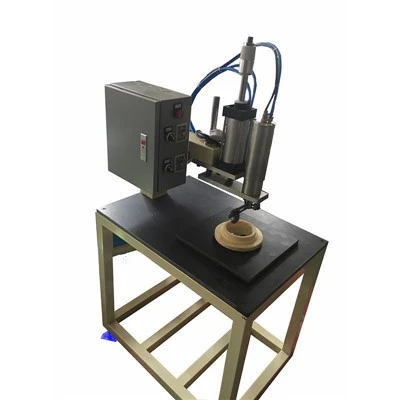
If you’re tired of the headache of inconsistent cylinder lengths, or you’re looking to upgrade from a machine that’s costing you money in waste and rejects, hit us up to chat. We’ll walk through what you need, no sales pitch nonsense, no confusing jargon—just real talk about how to make your production line run smoother. Let’s get your cuts perfect, together.
Blister Round Cover Cutting Machine References
- Plastic Machining Technology, Society of Plastics Engineers, 2021
- Industrial Automation and Accuracy, International Society of Automation, 2022
- Servo Motor Applications in Plastic Processing, Motion Control Association, 2020
Titagong (Dongguan) Machinery Co., Ltd.
We are one of the most reliable manufacturers and suppliers of automatic plastic cylinder machine in China. With abundant experience, we warmly welcome you to buy bulk high quality equipment in stock here and get pricelist from our factory. For price consultation, contact us.
Address: No.149, Qingyi Road, Qingxi Town, Dongguan City, Guangdong Province, China
E-mail: shuaizoe@gmali.com
WebSite: https://www.titagonggroup.com/
