When I first started out as a roofing sheet arching machine supplier, I lost count of how many times potential clients would reach out with the same question: “Can your arching machine actually make curved roofing sheets?” At first, I thought it was a straightforward yes, but over the years, I’ve learned there’s way more to this than just a simple answer. A lot of people mix up “arching” with full-on curved roofing, and that confusion leads to wasted time, wrong purchases, and even unfinished projects. Today, I’m breaking this down like I would with a new client who just walked into my workshop—no fancy jargon, just straight talk about what these machines can do, what they can’t, and why it matters for your next roofing job. Roofing Sheet Arching Machine

First off, let’s get the basics straight. A roofing sheet arching machine, at its core, is built to bend flat metal roofing sheets into a consistent arch shape. That arch is the gentle curve you see on most residential metal roofs—nothing extreme, just enough to let water run off easily and give the roof a clean, structured look. But curved roofing? That’s a whole different ballgame. We’re talking about roofs with tight, rounded bends, like barrel-style roofs, domed tops, or custom curved designs for commercial buildings or modern homes. So right out the gate: yes, your standard arching machine can make basic curved roofing sheets, but only the mild, uniform kind. It’s not designed for the super tight or irregular curves that some projects call for.
Let me walk you through how our machines work to make that arch happen, because that’s where the line gets blurry. Most of our arching machines use three main rollers: two fixed bottom rollers and one adjustable top roller. You feed a flat roofing sheet through the gap between these, and as the top roller pushes down, it bends the sheet into a smooth, consistent arch. The key here is adjustability—if you tweak the top roller’s pressure, you can change the tightness of the curve. For basic curved sheets, that’s perfect. If you’re doing a small shed roof, a residential metal roof, or a basic lean-to, you just set the roller to the right height, feed the sheets through, and you get the exact curve you need. I’ve had clients use our machines for small additions, new home builds, even barn roofs, and they all come back saying the arching works exactly as they expected.
But here’s the catch that trips people up: our machines can only handle curved roofing sheets that have a single, uniform radius. Radius is just the measurement of how tight the curve is—small radius means a tight, sharp curve, big radius means a wide, gentle one. If your project needs different curves in one sheet? Like a roof that curves in one section and straightens out in another? A standard arching machine can’t do that. It only bends the entire sheet into one consistent curve. That’s not a flaw in the machine—it’s just how it’s built. We designed it for standard arching, not for custom, multi-shape curves. I’ve had a few clients try to force a tight curve that our machine wasn’t built for, and what happens? The sheet gets wrinkled along the edges, or it warps, or it doesn’t hold the shape evenly. Metal roofing sheets are thin, but they’re rigid too—push them too hard, and they’ll crack or bend unevenly. That’s why it’s so important to match the machine to the job, not the other way around.
Now, let’s talk about when you actually shouldn’t use an arching machine for curved roofing sheets. If your project is a commercial building with a curved barrel roof, or a modern home with a domed roof, chances are you need a more specialized machine—like a roll-forming machine for curved profiles, or a hydraulic bender that can handle tighter, more complex curves. I always tell clients: ask yourself, “Is my curve gentle and uniform, or tight and unique?” If it’s the former, our arching machine works great. If it’s the latter, you might need a different tool. I’ve turned away more clients than I can count because they thought our machine could do something it wasn’t built for, and while it’s hard to lose a sale, it’s way better than them showing up to a job with sheets that are useless.
Another thing to consider: the type of roofing sheet you’re using. Our arching machines work best with corrugated metal sheets, standing-seam sheets, and other standard profile sheets. If you’re using a thicker gauge sheet, like 26-gauge or heavier, you might need to adjust the roller pressure to avoid warping. For thinner sheets, like 29-gauge, you have to be careful not to push too hard, because they can bend too much or crease. I always advise clients to test the machine on a scrap sheet of their material first. That’s a quick step—takes two minutes, and it saves you from messing up a full sheet. I give a scrap sheet with every machine we sell, just so people can do that test run before they start on their actual project.
I’ve also seen clients get confused between arching and curving for installation. Sometimes, even if your sheets are flat, you can install them over curved roof trusses to get a curved roof look. Wait—does that count? I’d say, for practical purposes, yes. Our arching machine bends the sheets to match the trusses, so when you install them, they look like a curved roof. That’s a common workaround for people who don’t want to invest in a more expensive curving machine. But if you actually need the sheet itself to have a curve (like for a standalone curved roof panel), then our machine works as long as the curve is uniform.
Let me share a real example to make this concrete. Last year, a contractor came to me saying he needed curved sheets for a small café he was building. He thought he needed a special curving machine, but when we walked through his plans, his roof was a gentle 1.5-inch arch—nothing extreme. We set our arching machine to the right roller height, he ran a sheet through, and it came out perfect. He installed it over standard trusses, and the finished roof looked exactly like the curved design he wanted. He came back a month later and bought two more machines for his crew. On the flip side, another client came to me with a domed roof for a backyard pavilion. He needed tight, curved panels that wrapped around the dome, and our arching machine couldn’t do that. I referred him to a company that specialized in custom curved panels, and he ended up with a perfect roof—we both walked away happy, even though I didn’t make that sale. That’s the thing about being a supplier, not just a seller: you have to be honest about what your machine can (and can’t) do.
There’s also a common myth I hear all the time: “If an arching machine bends metal, it can make any curved sheet.” That’s not true. Arching is a specific type of bending—uniform, gentle, single-radius. Curved roofing can mean so many other things: segmented curves, tapered curves, multi-directional curves, or tight, sharp bends. Each of those needs a different tool. Our arching machine is built for efficiency—you can crank out 20 sheets in an hour, which is way faster than hiring someone to bend each sheet by hand. For standard residential and small commercial jobs, that’s a game-changer. If you’re doing a custom job, though, you have to plan accordingly. You can’t expect a basic machine to do specialized work, just like you wouldn’t use a hammer to turn a screw.
Now, let’s talk about maintenance, because that plays a role too. If you want your arching machine to work well for curved sheets, you have to keep it in good shape. Worn rollers, misaligned guides, or loose bolts will cause uneven bends. I always tell clients to lubricate the rollers every few uses, check the alignment before each run, and tighten any loose parts. A well-maintained machine will give you consistent, smooth curves every time. I’ve had clients who bought a cheap used arching machine, didn’t maintain it, and then blamed the machine when their sheets came out warped. It’s not the machine—it’s the upkeep. That’s another thing I emphasize when I talk to potential buyers: owning a good arching machine is half the battle, taking care of it is the other half.
So, to circle back to the original question: Can a roofing sheet arching machine be used for curved roofing sheets? The answer is: yes, if the curves are uniform and gentle. No, if you need tight, complex, or multi-shaped curves. It’s that simple. But I know that’s not the answer a lot of people want to hear, because they just want a yes or no. That’s why I take the time to walk through each client’s specific project, show them what our machine can do, and be upfront about what it can’t. It builds trust, and trust is way more important than a one-time sale.
If you’re in the market for a roofing sheet arching machine, don’t just go for the cheapest option. Think about the type of work you do. If you’re a residential contractor, a basic arching machine will serve you well for years, making all the standard curved sheets you need. If you do custom commercial work, you might need to invest in a more specialized curving machine. And if you’re not sure what you need, just reach out. I’ve been in this business long enough to tell you exactly what will work for your job, no strings attached.
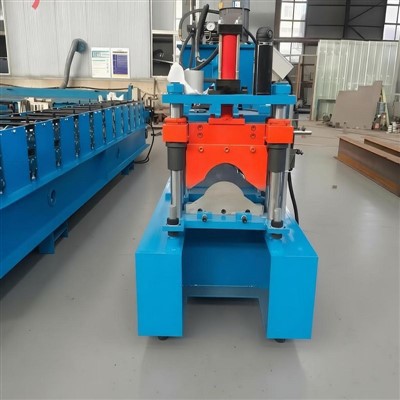
At the end of the day, roofing is all about getting the right materials and tools for the job. A roofing sheet arching machine is a workhorse for basic arch and curved sheets, but it’s not a one-size-fits-all solution. Use it for what it’s designed for, and it’ll save you time, money, and hassle on every project. If you’re ready to find out if our machine fits your needs, or if you have questions about what it can do for your specific roofing projects, don’t hesitate to get in touch. We’re here to help you get the right tools for the job, so you can get it done right.
Roof Ridge Cap Roll Forming Machine References
- Metal Roofing Alliance. (2022). Guide to Metal Roof Curves and Arching.
- Smith, J. (2021). Industrial Metal Bending Machines: Capabilities and Limitations. Construction Equipment Journal.
- National Roofing Contractors Association. (2023). Best Practices for Roof Panel Formation.
- Thompson, L. (2020). Cost-Effective Solutions for Curved Metal Roof Installations. Small Business Construction Review.
Botou Shengda Cold Forming Machinery Equipment Manufacturing Co., Ltd.
As one of the most professional roofing sheet arching machine manufacturers and suppliers in China, we’re featured by quality products and good price. Please rest assured to buy durable roofing sheet arching machine made in China here from our factory. Contact us for more details.
Address: Liuxin Village, Botou Town, Botou City, Cangzhou City, Hebei Province
E-mail: cangzhoushengda888@163.com
WebSite: https://www.sdrfm.com/
