What are the braking characteristics of automotive brushless motors?
As a seasoned supplier of automotive brushless motors, I’ve witnessed firsthand the remarkable advancements in this technology and its profound impact on the automotive industry. In this blog post, I’m excited to share insights into the braking characteristics of automotive brushless motors, a critical aspect that ensures safety, efficiency, and performance on the road. Automotive Brushless Motor
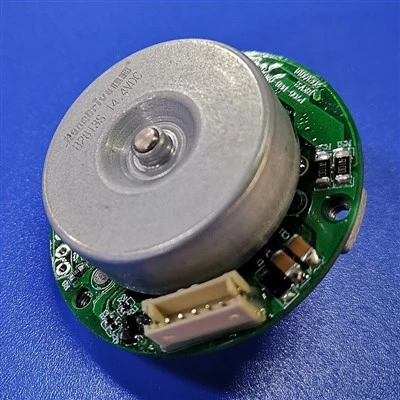
Automotive brushless motors have become the preferred choice for modern vehicles due to their numerous advantages over traditional brushed motors. These motors offer higher efficiency, longer lifespan, and better control, making them ideal for a wide range of applications, from electric vehicles (EVs) to hybrid electric vehicles (HEVs) and even some high – performance internal combustion engine (ICE) vehicles.
One of the most significant braking characteristics of automotive brushless motors is regenerative braking. Regenerative braking is a process where the motor acts as a generator during deceleration or braking. When the driver applies the brakes, the kinetic energy of the moving vehicle is converted into electrical energy. In a brushless motor, this is achieved by reversing the flow of current. The motor’s magnetic field and the rotation of its rotor work together to generate electricity, which is then stored in the vehicle’s battery.
This regenerative braking system offers several benefits. Firstly, it significantly improves the energy efficiency of the vehicle. By recapturing the kinetic energy that would otherwise be wasted as heat during traditional friction braking, the vehicle can use this stored energy to power the motor later, reducing the overall energy consumption. This is particularly important for EVs and HEVs, where maximizing the driving range is a top priority.
Secondly, regenerative braking reduces wear and tear on the traditional friction braking system. Since a significant portion of the braking is done through the motor, the brake pads and rotors experience less stress, resulting in longer service life and lower maintenance costs. This not only saves money for the vehicle owner but also contributes to a more sustainable automotive ecosystem by reducing the amount of brake pad debris and waste.
The braking torque of automotive brushless motors is another crucial characteristic. The braking torque determines the motor’s ability to slow down or stop the vehicle. It is directly related to the magnetic field strength and the current flowing through the motor windings. In a well – designed brushless motor, the braking torque can be precisely controlled. This allows for smooth and consistent braking performance, regardless of the vehicle’s speed or load.
For instance, in stop – and – go traffic, the motor can provide just enough braking torque to slow down the vehicle gently. On the other hand, when a sudden emergency stop is required, the motor can generate a high braking torque to bring the vehicle to a halt quickly. This precise control is made possible by the advanced electronic control systems that are integrated with the brushless motor. These control systems continuously monitor the vehicle’s speed, acceleration, and other parameters to adjust the braking torque in real – time.
The response time of automotive brushless motors during braking is also a key factor. Brushless motors have a very fast response time compared to traditional brushed motors. This is because they do not have the mechanical brushes and commutators that can cause delays in the electrical current flow. When the driver applies the brakes, the motor can quickly switch from the driving mode to the braking mode, providing immediate braking force.
This fast response time is crucial for safety, especially in situations where rapid deceleration is needed. For example, in an emergency braking scenario, every millisecond counts. A brushless motor’s ability to respond quickly can help reduce the stopping distance and potentially prevent accidents.
Another important aspect of the braking characteristics is the heat dissipation. During braking, especially when high braking forces are applied, the motor generates heat. If the heat is not dissipated effectively, it can damage the motor’s components and reduce its performance. Automotive brushless motors are designed with efficient heat dissipation systems.
These systems can include cooling fins on the motor housing, which increase the surface area for heat transfer, and liquid cooling systems in more advanced applications. By keeping the motor temperature within a safe range, the heat dissipation systems ensure that the motor can maintain its braking performance over extended periods of use.
In addition to the technical characteristics, the braking performance of automotive brushless motors can also be affected by external factors. For example, the road conditions, such as wet or icy roads, can reduce the traction between the tires and the road surface. This, in turn, can affect the effectiveness of the braking system, including the motor’s ability to generate braking torque.
To address these challenges, modern vehicles are equipped with advanced traction control systems. These systems work in conjunction with the brushless motor’s braking system to optimize the braking performance under different road conditions. They can adjust the braking force applied to each wheel to prevent wheel lock – up and ensure maximum traction.
As an automotive brushless motor supplier, I understand the importance of providing high – quality motors with excellent braking characteristics. Our company invests heavily in research and development to continuously improve the performance of our motors. We work closely with automotive manufacturers to understand their specific requirements and develop customized solutions.

Whether it’s for a small city EV or a large – scale commercial vehicle, we can provide brushless motors that offer reliable and efficient braking performance. Our motors are designed to meet the strictest safety and quality standards, ensuring that they can withstand the rigors of daily use on the road.
Robot Brushless Motor If you’re an automotive manufacturer or a company involved in the automotive industry looking for high – quality brushless motors with outstanding braking characteristics, I invite you to get in touch with us. We’re eager to discuss your specific needs and provide you with the best motor solutions for your applications.
References
- Bolton, W. (2016). Electric Motors and Control Techniques. Newnes.
- Kreuter, K., & Binder, A. (2017). Electric Vehicle Drives: Electrical Machines, Power Electronics and Gearboxes. Springer.
- Mohan, N., Undeland, T. M., & Robbins, W. P. (2012). Power Electronics: Converters, Applications, and Design. Wiley.
Shenzhen HengDrive Technologies Co., Ltd.
Shenzhen HengDrive Technologies Co., Ltd. is one of the most professional automotive brushless motor manufacturers and suppliers in China, specialized in providing high quality customized service. We warmly welcome you to buy the newest automotive brushless motor in stock here from our factory.
Address: Building A & F, FuNing Hi-Tech Park, XinTian Road, FuHai Street, BaoAn District, ShenZhen, GuangDong Province, China.
E-mail: Marketing001@hengdrive.com
WebSite: https://www.hengdrivemotor.com/
