Can rock and aggregate testing equipment be used for research purposes?
As a supplier of rock and aggregate testing equipment, I often get asked about the versatility and applicability of our products. One of the most common questions is whether our equipment can be used for research purposes. The answer is a resounding yes, and in this blog post, I’ll delve into the reasons why rock and aggregate testing equipment is not only suitable for research but also an invaluable asset in various scientific and academic endeavors. Rock and Aggregate Testing Equipment

Understanding Rock and Aggregate Testing Equipment
Before we explore its research applications, let’s first understand what rock and aggregate testing equipment entails. This equipment is designed to determine the physical and mechanical properties of rocks and aggregates. These properties include density, porosity, compressive strength, abrasion resistance, and soundness, among others. Common types of testing equipment include compression testing machines, sieve shakers, abrasion testers, and ultrasonic pulse velocity testers.
Research in Geology and Mining
In geology and mining research, rock and aggregate testing equipment plays a pivotal role. Geologists study the composition, structure, and history of the Earth’s crust, and understanding the properties of rocks is fundamental to this field. Our testing equipment can accurately measure the strength and elasticity of rocks, which helps in predicting how they will behave under different geological conditions. For example, in studying fault zones, the compressive strength of rocks can provide insights into the likelihood of earthquakes. By analyzing the strength of rocks at different depths and locations, scientists can develop models to better understand seismic activity.
In mining research, the equipment is used to evaluate the quality of ore deposits. Aggregate testing helps in determining the suitability of rocks for extraction and processing. Mines can use our abrasion testers to estimate the wear on mining equipment caused by the rocks. This information is crucial for optimizing mining operations, reducing costs, and ensuring the safety of workers. Additionally, by testing the density and porosity of rocks, miners can assess the potential for fluid flow in the reservoir, which is essential for oil and gas extraction.
Civil Engineering Research
Civil engineers rely on rock and aggregate testing to design and construct infrastructure projects. In research, our equipment helps in developing new construction materials and improving existing ones. For example, by testing the properties of different aggregates, researchers can create more durable and sustainable concrete. The sieve analysis provides information about the particle size distribution of aggregates, which affects the workability and strength of concrete. Through research, engineers can optimize the mix design to achieve the desired performance.
Moreover, in geotechnical engineering research, the behavior of soil and rock under the foundation of structures is a critical area of study. Our compression testing machines can simulate the load conditions that a foundation will experience over its lifetime. This allows researchers to develop better foundation design methods, ensuring the long – term stability of buildings, bridges, and other infrastructure. By using our equipment, civil engineers can also study the effects of natural disasters such as earthquakes and floods on structures, leading to the development of more resilient building designs.
Environmental Science Research
In environmental science research, rock and aggregate testing equipment has several applications. The study of the weathering and degradation of rocks is important for understanding soil formation and the cycling of nutrients in ecosystems. Our soundness testers can simulate the effects of freeze – thaw cycles and chemical weathering on rocks. This information can be used to predict how rocks will break down over time and contribute to soil development.
Additionally, in the context of waste management and environmental remediation, the equipment can be used to test the suitability of aggregates for use in landfill liners and water treatment systems. By analyzing the permeability and adsorption properties of rocks and aggregates, researchers can design more effective waste containment systems and water purification technologies.
Agricultural Research
Agricultural research can also benefit from rock and aggregate testing equipment. The physical properties of soil are closely related to the underlying rocks and aggregates. By testing the properties of these materials, researchers can gain insights into soil fertility, water – holding capacity, and drainage. For example, the porosity of aggregates can affect the infiltration rate of water into the soil, which is crucial for irrigation planning.
In some cases, crushed aggregates are used as soil amendments to improve soil structure. Our equipment can help in determining the optimal type and amount of aggregates to use for different soil types and crops. This can lead to increased agricultural productivity and more sustainable farming practices.
Advantages of Using Our Rock and Aggregate Testing Equipment for Research
One of the key advantages of using our equipment for research is its accuracy and reliability. Our products are designed and manufactured to meet international standards, ensuring that the test results are consistent and reproducible. This is crucial for scientific research, where the validity of the findings depends on the quality of the data.
Another advantage is the versatility of our equipment. We offer a wide range of testing machines that can be used for different types of tests and materials. This allows researchers to conduct comprehensive studies without having to invest in multiple pieces of specialized equipment.
In addition, our company provides excellent technical support and training. Our team of experts can assist researchers in setting up the equipment, conducting the tests, and interpreting the results. This ensures that researchers can make the most of our equipment and produce high – quality research.
Conclusion
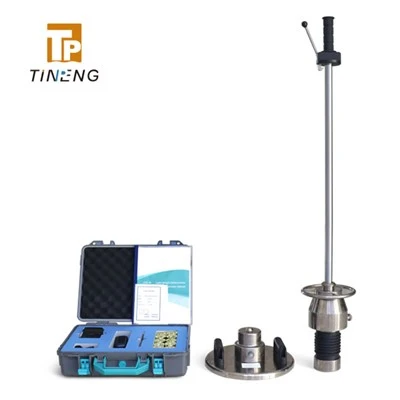
In conclusion, rock and aggregate testing equipment has a wide range of applications in research across various fields, including geology, mining, civil engineering, environmental science, and agriculture. Its ability to accurately measure the physical and mechanical properties of rocks and aggregates makes it an essential tool for many scientific and academic studies.
Abrasion Machines If you’re involved in research that requires the use of rock and aggregate testing equipment, I invite you to get in touch with us. Our team is ready to discuss your specific requirements and provide you with the best – suited solutions. Whether you need a single piece of equipment or a comprehensive testing system, we can offer high – quality products and professional services to support your research.
References
- ASTM International. (2023). Standards related to rock and aggregate testing.
- British Standards Institution. (2023). Specifications for testing equipment and procedures for rocks and aggregates.
- International Society for Rock Mechanics and Rock Engineering. (2023). Guidelines for rock testing in research.
Zhuozhou Tianpeng Imp. and Exp. Trade Co., Ltd.
Zhuozhou Tianpeng Imp. and Exp. Trade Co., Ltd. is one of the most professional rock and aggregate testing equipment manufacturers and suppliers in China, featured by quality products and good price. Please rest assured to buy advanced rock and aggregate testing equipment made in China here from our factory. Customized orders are welcome.
Address: Building C28, Hegu Technology Industrial Park, Development Zone, Zhuozhou, Hebei, China
E-mail: zhangdajing@testmould.com
WebSite: https://www.testmould.net/
