Hey there, if you’re here because you’ve been Googling “what’s the difference between forklift batteries anyway?”—same, I used to stare at my company’s warehouse floor wondering why some lifts hummed like a bee and others sounded like they were grunting to haul a pallet. Turns out, it’s all in the battery, and I’ve spent the last 7 years as a forklift battery supplier figuring this stuff out. No jargon, no boring corporate fluff, just what actually matters for your operation. Forklift Battery
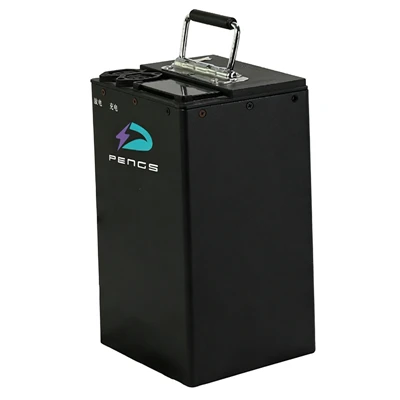
Let’s cut to the chase: there are way more types than just “old and new.” I’m gonna break down the main ones, the good, the bad, and the stuff you actually care about—like if it’ll fit your shift, your budget, and if you’re gonna be yelling at your team because a battery died mid-order.
First up, the OG: Lead-Acid Forklift Batteries. These are the ones that’ve been around since like, when your grandpa was hauling pallets with a manual lift. Don’t sleep on ’em though—they still make up like 60% of the market, mostly because they’re cheap and you can swap ’em in 2 minutes flat if you’ve got a spare sitting around. Wait, there’s two flavors here too: flooded lead-acid (FLA) and sealed lead-acid (SLA).
Flooded lead-acid is the basic one. You gotta top ’em up with distilled water every so often—like, once a week if you’re running 3 shifts. The downside? They outgas hydrogen, so you can’t stick ’em in a tight, unventilated closet. Also, if you overcharge ’em or don’t top up water, you’re looking at a dead battery in 2-4 years. But hey, if your warehouse has space for a battery charging room and you’re on a tight initial budget, these are solid. I’ve got clients who’ve run these for 10+ years by just staying on top of the water tops—no, really, I’m not exaggerating. The key is not skimping on maintenance, which a lot of new ops do.
Then sealed lead-acid, or SLA. These are the “no-fuss” version—you don’t have to add water, they don’t outgas, so you can stick ’em right next to the lift in the truck bay. The catch? They’re more expensive upfront, and they don’t last as long—like 3-5 years max, and you can’t deep-discharge ’em (aka don’t wait till the battery dies completely to charge it, or it’ll die forever). They’re perfect for small warehouses, 1-shift operations, or if you just don’t wanna deal with monitoring water levels. I sell a ton of these to small e-commerce shops that only run 8 hours a day—they plug ’em in overnight and forget about ’em, no hassle.
Now, the new kid on the block that everyone’s hyped about: Lithium-Ion Forklift Batteries. If you’ve used a power tool lately, you know how these work—light, hold a charge forever, no maintenance. But for forklifts, they’re a game-changer. Let’s be real, everyone’s jumping on lithium these days, but there’s a reason. First, they charge way faster. Like, 15-30 minutes for an 80% charge. No more swapping a whole battery between shifts—just plug it in during your 15-minute break, and you’re good to go. That cuts down on how many spare batteries you need, which saves a ton of space in the warehouse. Also, they last way longer—like 10-15 years, and you can deep-discharge them without killing the battery. And they don’t outgas, so you don’t need a dedicated charging room. That’s a huge win for small warehouses that don’t have extra space.
Wait, but hold on—they’re not for everyone. The upfront cost is 2-3x higher than lead-acid, so if you’re a small 1-shift shop, you might not recoup the savings for 5+ years. Also, you need a compatible charger, and you can’t just slap a random lithium charger on a lead-acid lift—mixing those is a fire hazard. I always tell clients, if you’re running 2 or 3 shifts a day, or you hate the hassle of swapping batteries and maintenance, lithium is worth every penny. I’ve had a client with a 5-shift operation go from 4 spare lead-acid batteries to 1 lithium one, saved them $12k a year on battery replacement and labor. That’s the kind of number that makes me do a happy dance.
Oh, and there’s a hybrid type, right? Wait, no—wait, sometimes people confuse gel batteries with lead-acid, or even something else. Wait, let’s cover gel and absorbed glass mat (AGM) batteries, because those are the middle ground people often ask about. Gel batteries are a type of sealed lead-acid, but instead of liquid electrolyte, it’s a gel. They don’t outgas, handle deep discharges better than SLA, and last 4-6 years. Good for apps where you’re not swapping batteries super often, but you don’t want the flooded maintenance. AGM is similar—electrolyte is absorbed in a mat, so spill-proof, no water topping, lasts 3-5 years. More expensive than flooded, cheaper than lithium. I sell these to warehouses that do a mix of 1 and 2 shifts, like grocery distribution centers that might run a little extra some days.
Wait, did I miss anything? Oh, sometimes people ask about nickel-cadmium (NiCd) batteries. Those were big back in the day, but they’re pretty much obsolete now. They’re durable, handle extreme temps, but they’re expensive, have memory effect (if you don’t discharge them fully before charging, they lose capacity), and toxic, so disposal is a pain. I literally don’t sell these anymore—last time I helped a client get one, it was a replacement for a vintage lift they refused to replace, not a new install. So we can pretty much ignore those unless you’re dealing with old equipment.
Now, let’s talk about what actually matters when picking one, not just the type. Because I’ve had clients come in saying “I need lithium” when a flooded lead-acid would’ve saved them $10k in year one. Here’s the real questions to ask: How many shifts do you run? 1 shift? Stick with SLA or gel, or if you wanna upgrade, lithium later. 2+ shifts? Lithium is probably worth it, because swapping batteries eats into shift time. Do you have space for a charging room? Flooded lead-acid needs that, lithium or SLA don’t. What’s your budget for upfront vs long-term? If you can swing the higher cost now, lithium’s ROI is unbeatable for most ops.
A lot of people get stuck on the upfront cost, but you have to think about the whole picture. A lithium battery lasts twice as long as flooded lead-acid, so even if it’s 3x the price, you only replace it half as often. No more buying 4 spare batteries—just 1. No maintenance costs (like buying distilled water, paying someone to check levels). That adds up.
Wait, let’s be real, I’m not here to push one over the other. My job is to get you the right battery for your lift and your workflow, not just sell the most expensive one. Last month I had a small hardware store client who thought they needed lithium, but they only ran 1 shift, 5 days a week, and had $10k budget. I got them sealed lead-acid, which was half the cost, and they’re thrilled—no maintenance, charges overnight, never had a problem. That’s the stuff that keeps me in business.
If you’re still confused, that’s totally fine. I work with all kinds of ops, from 2-man warehouses to big distribution centers. I can walk you through exactly what you need, no sales pitch, no fine print. Just tell me what kind of forklifts you have, how many shifts you run, and your budget, and I’ll hook you up with options that fit. Don’t overcomplicate it—most people end up picking either lithium if they run multiple shifts, or sealed lead-acid if it’s 1 shift, and that’s it.

At the end of the day, the best forklift battery isn’t the newest or the most expensive—it’s the one that works for your operation. No more dead batteries mid-order, no more hauling heavy spares around, no more yelling at your team because a charging room is in the wrong spot. If you wanna chat through your specific setup, hit me up. I’m here to help.
Forklift Battery References
- Material Handling Industry Association. (2022). Forklift Battery Technology & Market Trends.
- Battery University. (2023). Lithium-Ion vs Lead-Acid Batteries for Industrial Equipment.
- OSHA. (2021). Safety Guidelines for Forklift Battery Handling & Charging.
- Industrial Truck Association. (2022). Maintenance Best Practices for Industrial Forklift Batteries.
Zhuhai Greaton Electronic Technology Co., Ltd.
As one of the most professional forklift battery manufacturers and suppliers in China, we have world-leading production equipment and strong manufacturing capabilities. Please rest assured to wholesale advanced forklift battery in stock here from our factory. Customized orders are welcome.
Address: 2nd Floor, Building A3, No. 6, Liulu, Xinqing Science and Technology Industrial Park, Jing’an Town, Doumen District, Zhuhai City
E-mail: wangchen1@psbattery.cn
WebSite: https://www.cngreaton.com/
