Hey everyone, I’m Jake, been running this pipe fittings mold shop for over 12 years now, and let me tell you—one question I get more than any other is this: can our molds hold up in super high-temperature environments? Pipe Fittings Mold
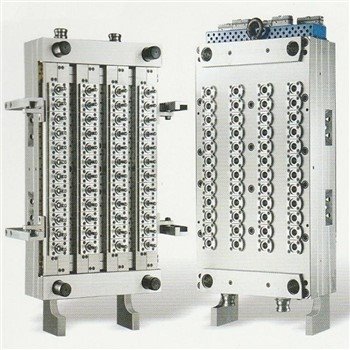
I get it. If you’re in something like industrial piping for power plants, chemical processing, or even some big commercial HVAC setups, you’re not dealing with room temp water or random plumbing jobs. Your pipes and fittings are moving stuff that’s hot—way hotter than your kitchen tap, that’s for sure. And if your mold can’t handle that heat, you’re gonna have a bad time: warped parts, weirdly shaped fittings that leak, maybe even mold cracks that kill production. So let’s break this down like I do with my guys in the shop—no overly fancy jargon, just straight-up what works, what doesn’t, and when to call it quits.
First off, let’s start with basics: what even counts as “high-temperature” for pipe fittings? A lot of people ask if a mold works for “hot stuff” but don’t define it. For our industry, high-temp here is usually anything above 150°F (65°C) up to like 500°F (260°C). Wait, hold on—some of you might be thinking, “Wait, my stuff hits 800°F?” Yeah, that’s a different level, we’ll get to that too. But first, why does temp matter so much here? Molds are metal, right—mostly tool steel, aluminum, sometimes stainless steel. Metal expands when it heats up, contracts when it cools. That’s not a big deal for room temp, but if you’re cycling the mold from, say, 70°F to 400°F 20 times a day, every day, that expansion and contraction can cause stress over time. Add to that the plastic you’re molding (most pipe fittings are made of PVC, CPVC, PEX, or maybe HDPE) — that plastic doesn’t just melt at high temps, it can eat into certain metals, or release gases that corrode the mold.
Now, let’s get to the good stuff: can our molds be used here? Short answer: sometimes—if you pick the right mold materials, and set up your process right. I’ve seen people try to run cheap aluminum molds for high-temp CPVC, and last I checked, those guys were replacing molds every 2 months. But I’ve also seen our tool steel molds running the exact same CPVC stuff, 12-hour shifts, 5 days a week, and they’re still going strong after 3 years. That’s the difference, right?
Let’s talk mold materials first, ‘cause that’s the make-or-break. Most off-the-shelf aluminum molds max out around 250°F (120°C). Push that, and aluminum starts to soften—its structural integrity drops, so when you’re injecting plastic under pressure, the mold can flex, leading to wonky fitting dimensions. But if you go with a proper hot-work tool steel, like H13 or S7? That stuff can handle way higher temps—up to 1000°F (538°C) easily, no flex, no softening. We use H13 90% of the time for high-temp jobs, ‘cause it’s tough, and we heat-treat it right so it holds its hardness even when it’s baking for hours.
Wait, but what about surface treatments? Just the steel alone isn’t enough. If you’re molding something like PVC, which releases hydrochloric acid when it’s heated (that’s the weird smell sometimes when you melt PVC), that acid can eat into the mold’s surface over time, leading to pitting. Pitting means your fittings get spots, or they leak at the seams. So we add a coating—usually electroless nickel plating, or sometimes a PVD coating like titanium nitride (TiN) for extra hardness. That coating acts like a barrier between the steel and the hot plastic, stops corrosion, and makes the mold easier to clean too. I had a client last year who was molding PEX-a for geothermal systems, which runs at 180°F to 200°F, and he was having mold corrosion until we added the PVD coating. Now he runs that same mold 24/7, no issues.
But here’s the catch: it’s not just the mold itself. The molding process has to match the high-temp environment of the finished part. Wait, wait—you might be thinking, “The mold’s for making the fitting, not the fitting itself?” No, no—wait, let’s clarify. If your finished pipe fitting is gonna be used in a high-temp system, the mold has to be designed to make a fitting that can withstand that, which means the mold’s operating parameters have to adjust too. For example, if you’re making a CPVC fitting for a boiler feed line, you can’t inject the plastic at the same temp you use for a regular PVC cold water fitting. CPVC needs a higher melt temp—like 400°F to 450°F, vs regular PVC’s 350°F. And if your mold is sitting at too low a temp for that melted CPVC, the plastic won’t set right—it’ll stay soft, and when it’s put into your high-temp line, it’ll warp. So we design the mold with temperature control channels built in—coolant lines, or even electric heating elements if you need to keep the mold at a consistent 200°F or whatever—so the plastic cures properly, and the fitting is strong enough to handle the heat long-term.
Now, what about the edge cases? What if you’re dealing with stuff that’s really hot—like 500°F plus? We had a client a few years back who was making pipe fittings for a steel mill’s exhaust system, and that exhaust was hitting 700°F. Wait, PVC or CPVC won’t touch that—they melt at like 300°F. So he was molding with PEEK, a high-performance thermoplastic that can handle way higher temps. For that, we don’t even use H13 steel—we use a super-alloy mold, like Waspaloy, that’s made specifically for extreme heat. Those molds are way pricier, but they don’t crack, don’t soften, and can handle being cycled with PEEK 24/7. We only build those for niche stuff, but it’s doable. I’ve seen people try to use regular molds for that job, and they were ruined in a week.
Wait, but let’s talk about common mistakes I see new guys make. First, they buy the cheapest mold they can find, assume it works for high-temp. No. Cheap molds are usually made from low-grade aluminum or even cold-work steel, which softens way too fast. Second, they don’t maintain the mold. If you run a high-temp mold and don’t clean that acid residue off it every few runs, that residue etches the surface, leading to pitting, and then the mold’s useless. Third, they don’t adjust the mold temp for the plastic. I had a small plumbing supply client last year who was making CPVC fittings for a hot water recirculation system, and he kept getting leaking elbows. Turned out he was running the mold at 80°F, same as for regular PVC. We cranked the mold temp up to 180°F, and the leaks stopped. That cost him nothing extra, just a tweak in the control panel.
Another thing: thermal fatigue. That’s when the mold heats up and cools down over and over, like if you’re cycling a mold for parts that go from a cold system to a hot one. Over time, that expansion and contraction creates tiny cracks in the mold, called “heat checking.” Those cracks get worse, until the mold breaks. The way we fight that is with proper mold design—thicker sections where the heat is concentrated, and using materials that have good thermal conductivity, so they expand evenly, no hot spots. H13 steel is great for that, way better than aluminum for thermal fatigue. I’ve had molds we built 8 years ago that cycle between 70°F and 350°F, and they still don’t have any heat checking.
Wait, let’s address the elephant in the room: what if your application is super high-temp, like above 1000°F? That’s not really pipe fittings for water or chemicals—that’s for things like molten metal lines or extreme industrial processes. For that, we don’t use plastic pipe fittings at all, we use metal pipe fittings, and the molds are for metal casting. But the question here is about pipe fittings mold, which are almost always for plastic, so that’s a whole separate thing. We don’t mess with that, ‘cause it’s not our bread and butter, and honestly, it’s a totally different science.
So, to wrap this up, here’s the bottom line: a standard off-the-shelf pipe fittings mold (cheap aluminum, basic steel) can’t handle high-temp environments—you’ll get warped parts, early mold failure, wasted material. But a custom-built pipe fittings mold, made with hot-work tool steel, proper surface coatings, and designed with temperature control for high-temp plastics? That’s totally doable, and we’ve built hundreds of those for clients in power, chemical, and geothermal industries.
If you’re not sure what you need—whether you’re running hot water lines, industrial chemical piping, or something even hotter—hit us up, no pressure. We’ll ask you a few quick questions: what’s the max temp of your finished fittings? What plastic are you using? How many parts do you need to run a week? And we’ll send you a mold that works, not just a cheap one that’ll break in 2 months. No hard sell, just straight talk, ‘cause that’s how we’ve stayed in business this long.

At the end of the day, your pipe fittings have to hold up when the heat’s on—so your mold has to, too. Don’t cut corners here, ‘cause a bad mold will cost you way more in replacements and downtime than a quality custom mold would. That’s the lesson I learned early on, and it’s stuck with me ever since.
References
Auxiliary Machinery ASM International. (2005). Heat Treater’s Guide: Practices and Procedures for Irons and Steels. ASM International.
ASTM International. (2018). Standard Specification for Hot-Work Tool Steels. ASTM International.
Rosato, D. V., & Rosato, M. G. (2012). Mold Design Handbook for Plastics (6th ed.). Hanser Publications.
Shenzhou Machinery Co., Ltd.
As one of the most professional pipe fittings mold manufacturers and suppliers in China, we’re featured by quality products and good price. Please feel free to buy advanced pipe fittings mold made in China here from our factory. We also accept customized orders.
Address: Fenghuang Town, Zhangjiagang City, Jiangsu Province, P.R.China
E-mail: sale@shenzhoumac.com
WebSite: https://www.shen-zhoumachinery.com/
