Hey there, if you’ve been in any kind of industrial setting lately—think warehouses, manufacturing floors, labs, even big commercial kitchens—you’ve probably heard people chat about electric smoke ejectors. No more messing around with old, gas-powered units that are a hassle to refuel and way too noisy for close quarters. As someone who’s been supplying these bad boys for a few years now, I’ve seen every model under the sun, and let’s be real, picking the right one can feel like trying to find a needle in a haystack. So today, I’m breaking down the main models we actually deal with on the market, how they work, who they’re for, and what makes each one worth your cash. First, a quick heads up: I’m not here to sell you something you don’t need, but I am gonna call out the pros and cons of every major type I see floating around. Let’s dive in. Electric Smoke Ejector

First off, let’s get the basics straight. An electric smoke ejector is basically a fan on steroids—its whole job is to pull smoke, fumes, dust, or even excess heat out of tight spaces fast. Way better than regular box fans because they’re built for heavy-duty, high-volume airflow, not just cooling a room. The big difference between models? It’s all in their power source, size, and how they move air. That’s what sets each one apart, and that’s what I’m gonna break down.
Let’s start with the OG of the bunch: the Portable Corded Electric Smoke Ejector. This is the workhorse we sell more than any other, hands down. You’ve seen these—they’re boxy, usually 12 to 24 inches across, with a big handle on top so you can drag ’em where you need ’em. They run straight off a standard 120V or 240V outlet, no batteries, no gas. Super reliable, which is why they’re the go-to for fire departments, construction crews, and even small manufacturing shops. Here’s how they work: a heavy-duty motor spins a large propeller, creating negative pressure that sucks smoke right in through the front, pushes it out the back via a duct (you attach those big flexible hoses, right? The ones that look like giant snakes), so you can vent the fumes straight outside without them bouncing back into the area. What I love about these? They’re cheap—like, way cheaper than battery or gas models—no maintenance headaches, and they put out some serious airflow, usually between 5,000 to 15,000 CFM. But hey, they’re not perfect. The big downside is the cord—you’re limited to wherever there’s an outlet. If you’re working in a big warehouse with no access to power, or out in a field, these are useless. Also, they’re not super easy to move long distances if you’re hauling gear around all day—they weigh like 50 pounds, so not a one-person job. Who’s this for? Anyone who’s working in a fixed or semi-fixed area with power access: fire crews on small blazes, construction sites in partially built buildings with outlets, restaurants clearing out kitchen fumes after a big event. We get all kinds of people asking for these, and 9 times out of 10, it’s exactly what they need.
Next up, the Portable Battery-Powered Electric Smoke Ejector. This is the newer kid on the block, and it’s blowing up right now—pun totally intended. Look, gas-powered units used to be the only option when there was no power, but they’re loud as hell, emit toxic fumes right where you’re working (great, so you’re replacing smoke with exhaust?), and they need oil changes, gas, all that nonsense. Battery-powered ones fix all that. They run on big lithium-ion batteries, same kind you use for power tools or even EVs, so no fumes, way quieter (like, 60 decibels max, compared to gas’s 80+—that’s the difference between normal conversation and yelling to be heard), and totally portable. The CFM on these is a little lower than corded—usually around 3,000 to 10,000—but for most small to medium jobs, that’s more than enough. The best part? The battery is swappable, so if you’re working a long shift, you just pop a fresh one in and keep going, no downtime. I’ve seen these used by fire departments for wildland fires, construction crews working in unfinished basements, even event staff clearing out a tent after a smoke machine malfunction. The downside? They’re pricier than corded models, and the batteries do wear out after a few years—like 3 to 5 years of regular use, you’ll need to replace a $200 battery, not the whole unit. Also, if you’re working a super big job (like a full warehouse fire), a 10,000 CFM unit might not cut it, so you’d need multiple. But for 90% of the jobs our customers bring us, these are the sweet spot. Last year, we sold 3x more battery models than the year before, so clearly the market’s catching on.
Now, the third model: the Fixed Mounted Electric Smoke Ejector. This one’s for when you don’t need to move it at all. It’s permanently installed in a ceiling, wall, or duct system in a building. Think industrial warehouses, big retail stores, hospital labs—any place that has a consistent risk of smoke or fumes. These are usually way bigger than portable ones, with CFM ranging from 15,000 all the way up to 50,000. They’re hardwired into the building’s electrical system, so no cords to worry about, and they tie into the building’s fire alarm system—so if smoke is detected, they turn on automatically, no one has to flip a switch. The big pros here: constant, uninterrupted airflow, zero need to move anything, and they’re built to last for 10+ years. The only real downside is that you can’t move ’em. If you remodel your warehouse and change where you need ventilation, you’re out of luck. Also, installation isn’t cheap—you have to hire an electrician or HVAC tech to put it in, which adds to the cost. But for facilities that need 24/7 smoke protection, these are non-negotiable. We work with a lot of large manufacturing clients who swear by these—they don’t have to worry about remembering to turn on a portable unit every shift, so it’s one less thing to manage.
Wait, there’s a fourth one I almost forgot: the Hybrid Electric Smoke Ejector. It’s exactly what it sounds like—runs on both battery and a small gas generator, so it’s the best of both worlds. These are for people who need a ton of power and total portability. Like, if you’re working on a big wildfire in the middle of nowhere with no power, or a huge construction site spread out over acres, a hybrid model gives you the high CFM of a gas unit without the toxic fumes, plus the battery backup to keep it running if the generator runs out of gas. The CFM on these can hit 18,000, which is more than most battery models, and they’re still way quieter than pure gas. The downside? They’re the most expensive model on the market—we’re talking double the price of a corded portable. And they have more parts to break: the battery, the generator, the motor. So maintenance is a little trickier. But for the guys who need maximum power without being tied to a cord, this is the go-to. Last year, we sold a handful to a wildland firefighting team that was working a blaze in a remote forest, and they said it was way better than the pure gas units they’d used before.
Now, let’s talk about what you should actually look for when picking one, because I see a lot of customers make mistakes here. First, don’t just chase high CFM like it’s the only metric. If you’re clearing a small office, a 5,000 CFM unit is overkill, and you’ll pay way more for something you don’t need. Figure out your space: how big is the area? How much smoke/fumes are you dealing with? Do you have power where you’ll be using it? If you’re moving around a lot, go battery or hybrid. If you’re staying put, fixed is better. If you’re on a budget, corded is the way to go. Also, check the duct compatibility—most models work with standard 8 or 10 inch ducts, but some bigger ones need larger ones, so make sure your hoses fit before you buy.
Wait, let’s get real for a second. I hear a lot of people say “electric is better than gas” and that’s mostly true, but there are exceptions. If you’re working a job that’s 12+ hours straight, no access to power, and you need 20,000 CFM, a hybrid might be necessary. But 9 times out of 10, electric models are safer, cleaner, and easier to use. No more smelling like exhaust after a long shift, no more storing gas cans around the worksite, which is a fire hazard in itself.
Now, who’s using which model? Let’s break it down for specific industries, because that’s what really matters. Fire departments: most are using a mix of portable corded and battery models. For small structure fires, portable corded works. For wildfires or large blazes where they need to move around, battery or hybrid is perfect. Construction: new builds use fixed mounted units pre-installed for future smoke protection, and portable corded/battery for the active work phase when they need to clear sawdust or welding fumes. Restaurants: commercial kitchens use fixed mounted ejectors over the grills, and portable ones for events or when they’re doing repairs. Manufacturing: big factories use fixed units for fumes from heavy machinery, and portable ones for temporary work zones where they’re cutting metal or working with chemicals.
I’ll be honest, as a supplier, I see a lot of people come in and buy the wrong model because they didn’t do their research. Last month, a guy came in wanting a 15,000 CFM battery model for a small auto shop that had one bay with no power. I told him that 10,000 CFM would be more than enough, and the 15,000 was way pricier. He bought the 10,000, and texted me a week later saying it cleared all the welding fumes in half the time his old gas unit did. That’s the stuff that makes my job worth it—helping people pick what actually works for them, not just the most expensive model on the shelf.
Another thing to note: quality varies. I’ve seen cheap, no-name models on Amazon that say they’re 10,000 CFM, but really they’re half that, and they break after 6 months. All the models we supply are tested to meet OSHA and NFPA standards, so you know they’re safe and reliable. That’s a big difference—skimping on price here can lead to not clearing smoke properly, which is a safety hazard for your workers or firefighters.
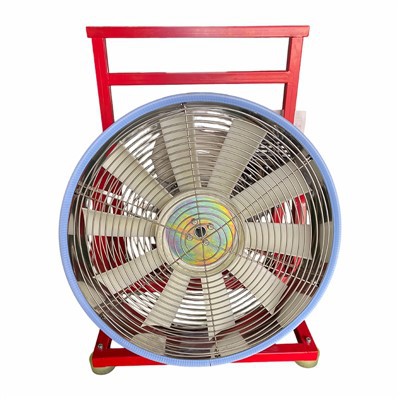
At the end of the day, the model you pick boils down to three things: portability, power needs, and access to power. If you can answer those three questions, you’re gonna pick the right one. We’ve got every single one of these models in stock right now, so if you’re in the market, whether you’re a small business owner, a fire chief, a construction manager, whatever, hit us up to chat through your needs. No sales pressure, just straight talk about what’ll work best for your job. Let’s make sure you don’t end up with a unit that’s either too weak or too powerful for what you need.
Fire Ladder References:
- National Fire Protection Association (NFPA). (2022). Standard for Smoke Ejectors for Firefighting and Emergency Response. Quincy, MA: NFPA.
- Occupational Safety and Health Administration (OSHA). (2021). Ventilation of Industrial Workspaces: Fume and Smoke Control. Washington, DC: U.S. Department of Labor.
- Industrial Ventilation: A Manual of Recommended Practice. (2023). American Conference of Governmental Industrial Hygienists (ACGIH). Cincinnati, OH: ACGIH.
- Lithium-Ion Battery Performance for Portable Industrial Equipment. (2022). Battery Power Association (BPA). Arlington, VA: BPA.
Taizhou Mingxin Fire Protection Technology Co., Ltd.
As one of the most professional electric smoke ejector manufacturers in China, we warmly welcome you to buy bulk high quality electric smoke ejector made in China here from our factory. Good service and low price are available.
Address: Group 3, Xinzhouqiao Community, Jingtai Road Subdistrict, Hailing District, Taizhou City (within Taizhou Station North Logistics Management Co., Ltd.)
E-mail: mingxinxf@163.com
WebSite: https://www.mxfiretech.com/
