Using a DC brush planetary gear motor in an intermittent – duty application can be a game – changer for many projects. But, there are several requirements you need to consider to ensure that the motor works efficiently and lasts long. As a supplier of DC brush planetary gear motors, I’ve dealt with a ton of customers who have various needs, and I’m here to share some insights on what’s needed for intermittent – duty applications. DC Brush Planetary Gear Motor

Understanding Intermittent – Duty Applications
First off, let’s clarify what an intermittent – duty application is. In simple terms, it’s an application where the motor doesn’t run continuously. Instead, it operates in short bursts with periods of rest in between. Examples of this could be a conveyor belt that moves products at intervals or a robotic arm that only moves when it needs to pick or place an item.
Power Requirements
One of the most crucial requirements is getting the power right. You need to figure out how much power your application demands during the active periods. This means calculating the voltage, current, and torque needed for the motor to do its job. For a DC brush planetary gear motor, the voltage is crucial as it determines the speed at which the motor rotates. You can’t just pick any voltage; it has to be within the motor’s rated voltage range.
If you use a voltage that’s too high, the motor might overheat, and its lifespan could be significantly reduced. On the other hand, a voltage that’s too low won’t provide enough power for the motor to perform the required tasks. So, it’s essential to measure the power requirements of your specific application accurately. You can do this by looking at the load the motor will be driving. For instance, if it’s moving a heavy object, you’ll need a motor with higher torque and power.
Duty Cycle
The duty cycle is another key factor. It’s defined as the ratio of the time the motor is running to the total cycle time (running time + rest time). For intermittent – duty applications, the duty cycle is usually less than 100%. You need to know the duty cycle of your application because it affects how the motor dissipates heat.
During the rest periods, the motor has a chance to cool down. If the duty cycle is too high, the motor may not have enough time to cool, leading to overheating. Overheating can cause damage to the motor’s windings, brushes, and other components. So, make sure you calculate the duty cycle accurately and choose a motor that can handle it. For example, if your motor runs for 10 seconds and then rests for 20 seconds, the duty cycle is 10 / (10 + 20)= 33.3%.
Torque and Speed
Torque and speed requirements are closely related to the power and the application itself. Torque is the rotational force that the motor can generate, and speed is how fast the motor can rotate. In an intermittent – duty application, you need to determine the peak torque required for the motor to start and perform its tasks.
For example, if you’re using the motor in a small lifting mechanism, the peak torque will be needed when the mechanism starts to lift the load. The motor also needs to operate at an appropriate speed. If the speed is too high, it might cause the load to move too fast and potentially cause damage. Too low of a speed could make the process inefficient. So, select a motor with the right torque – speed characteristics for your application. DC brush planetary gear motors are great for this because they can provide high torque at relatively low speeds.
Environmental Conditions
The environment in which the motor will operate also matters a lot. If the application is in a dusty or dirty environment, you’ll need a motor that’s protected against dust and debris. Some DC brush planetary gear motors come with enclosures or seals to keep out contaminants.
Temperature is another factor. Extreme temperatures can affect the performance of the motor. In high – temperature environments, the motor may overheat more easily, even with a suitable duty cycle. In cold temperatures, the lubricants in the gearbox may thicken, affecting the motor’s efficiency. Make sure to choose a motor that can withstand the temperature range of your application.
Gear Ratio
The gear ratio of the planetary gearbox is important for intermittent – duty applications. A suitable gear ratio can help you achieve the desired torque and speed. For applications that require high torque and low speed, a higher gear ratio is needed. This allows the motor to generate more force at a slower pace.
Conversely, if you need a higher speed and lower torque, a lower gear ratio would be appropriate. The planetary gear system in these motors is designed to provide efficient power transmission and high torque multiplication. So, select a gear ratio that matches the requirements of your application.
Motor Control
Proper motor control is essential for intermittent – duty applications. You need to be able to start and stop the motor reliably during the active and rest periods. Some applications may also require speed control. For example, if you’re using the motor in a precision assembly line, you may need to adjust the speed depending on the task.
There are various ways to control a DC brush planetary gear motor. You can use simple on – off switches for basic control. For more advanced control, you can use motor controllers that can adjust the voltage, current, and speed. These controllers can also provide features like over – current protection and speed regulation.
Maintenance
Even though DC brush planetary gear motors are relatively robust, they still require some maintenance. In intermittent – duty applications, regular maintenance can help extend the motor’s lifespan. You should periodically check the brushes, as they wear out over time. Replace them when they reach the end of their service life.
Also, check the lubrication in the gearbox. Over time, the lubricant may break down or leak, so it’s important to replenish it as needed. Inspect the motor for any signs of damage, such as cracked enclosures or loose connections.
Choosing the Right Motor
When it comes to choosing the right DC brush planetary gear motor for your intermittent – duty application, consider all the factors I’ve mentioned above. Make a list of your specific requirements, including power, duty cycle, torque, speed, environmental conditions, gear ratio, and control needs.
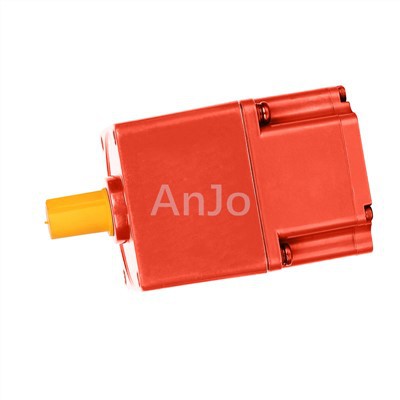
Don’t hesitate to reach out to a supplier like me. I’ve got the knowledge and experience to help you select the perfect motor for your project. I’ve dealt with a wide range of applications, from small DIY projects to large industrial applications.
Micro Gear Motor If you’re in the market for a DC brush planetary gear motor for your intermittent – duty application, I’m here to assist you. Whether you need more information, advice on choosing the right motor, or are ready to place an order, let’s start a conversation. You can get in touch with me to discuss your specific needs, and we can work together to find the best solution for your project. I’m committed to providing high – quality motors and outstanding customer service. So, don’t wait any longer and get in touch today.
References
- "Electric Motors and Drives: Fundamentals, Types and Applications" by Austin Hughes and Bill Drury.
- "Motor Handbook" published by Baldor Electric Company.
Hangzhou ANG Drive Co., Ltd.
We’re well-known as one of the leading dc brush planetary gear motor manufacturers and suppliers in China, also support custom service. Please feel free to wholesale high quality dc brush planetary gear motor made in China here from our factory. Contact us for more details.
Address: No.185, Jincheng Rd., Hangzhou 311202, China
E-mail: export6@angdrive.com
WebSite: https://www.angdrive.com/
