Hey there! I’m a supplier of high – voltage distribution boxes, and today I’m gonna dive into how the cooling system of these boxes actually works. It’s super important to understand this aspect because a well – functioning cooling system is crucial for the performance and longevity of the high – voltage distribution box. High-Voltage Distribution Box
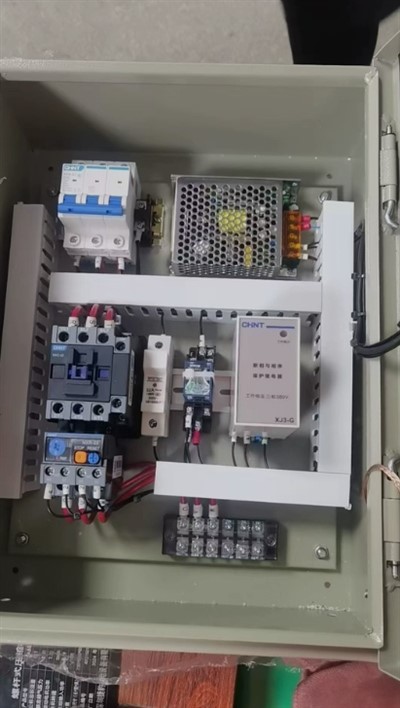
Let’s start with why we even need a cooling system in the first place. High – voltage distribution boxes are responsible for handling large amounts of electrical power. When electricity flows through the components inside these boxes, such as circuit breakers, fuses, and busbars, resistance comes into play. And as we all know from basic physics, when there’s resistance to electrical current, heat is generated. If this heat isn’t managed properly, it can lead to a whole bunch of problems. For example, it can cause the components to overheat, which may reduce their efficiency or even damage them permanently. In extreme cases, overheating can pose a safety risk, like the potential for electrical fires or short – circuits.
So, how do these cooling systems tackle the heat issue? There are a few common types of cooling systems used in high – voltage distribution boxes, and I’ll walk you through each of them.
Air Cooling
This is one of the most widely used cooling methods. It’s relatively simple and cost – effective, which is why a lot of our customers prefer it. The basic idea behind air cooling is to use fans to move air through the box.
We install fans, either intake fans or exhaust fans, or sometimes both. Intake fans draw in cool air from the surroundings and push it into the box. This cool air then absorbs the heat generated by the electrical components. The air, now heated up, is expelled through the exhaust fans. It’s like a continuous cycle of bringing in fresh, cool air and getting rid of the hot air.
To make the air cooling system more efficient, we often use fins on the components. These fins increase the surface area of the components that are in contact with the air. You know, the more surface area there is, the more heat can be transferred from the components to the air. It’s kinda like spreading out a hot pancake to make it cool down faster.
We also pay attention to the layout of the box. We design the internal structure in a way that allows the air to flow smoothly. There are channels and spaces that direct the air to all the important components, making sure they all get cooled evenly.
Liquid Cooling
Now, for some high – end applications where the heat generated is really high, we use liquid cooling systems. Liquid cooling is more complex than air cooling but can handle much larger amounts of heat.
In a liquid cooling system, we use a liquid coolant, usually something like glycol or water – based solutions. The coolant flows through small tubes or channels that are in close contact with the heat – generating components. As the coolant passes by these components, it absorbs the heat.
The heated coolant then flows to a heat exchanger. A heat exchanger is a device that transfers the heat from the coolant to the surrounding air. It’s like a radiator in your car. The heat exchanger has a large surface area with fins, which helps in dissipating the heat quickly. Once the coolant has been cooled down in the heat exchanger, it’s pumped back to the components to start the cycle all over again.
One of the big advantages of liquid cooling is that liquids have a higher heat – carrying capacity than air. This means they can absorb more heat in a smaller volume. So, even in situations where the high – voltage distribution box is generating a huge amount of heat, a liquid cooling system can keep the temperatures under control.
Phase – Change Cooling
This is a more advanced and less common type of cooling system, but it’s really effective. Phase – change cooling works based on the principle of phase transitions. You know how water turns into steam when it’s heated? Well, in phase – change cooling, we use a special refrigerant that can change from a liquid to a gas state at relatively low temperatures.
The refrigerant is in contact with the heat – generating components. When it absorbs heat from these components, it evaporates, changing from a liquid to a gas. This gas then moves to a condenser. In the condenser, the gas is cooled down, and it condenses back into a liquid. The liquid refrigerant is then pumped back to the components to repeat the process.
The really cool thing about phase – change cooling is that a large amount of heat is absorbed during the phase transition from liquid to gas. This makes it extremely efficient at removing heat from the high – voltage distribution box, even in the most demanding situations.
Monitoring and Control
We don’t just install the cooling system and leave it at that. We also have various monitoring and control mechanisms in place to make sure the cooling system is working as it should.
We use temperature sensors inside the high – voltage distribution box. These sensors constantly measure the temperature of the components. If the temperature starts to rise above a certain set point, the control system kicks in.
For air – cooled systems, the control system can increase the speed of the fans. This way, more air is circulated, and the heat is removed more quickly. In liquid – cooled systems, the control system can adjust the flow rate of the coolant. If the temperature is too high, it can pump more coolant through the system to absorb more heat.
In phase – change cooling systems, the control system can regulate the pressure and temperature of the refrigerant to optimize the phase – change process.
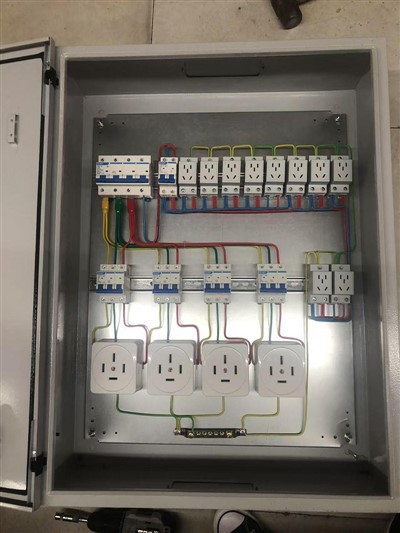
Overall, the cooling system of a high – voltage distribution box is a sophisticated setup that combines different technologies to keep the box operating at a safe temperature. Whether it’s air cooling for standard applications or liquid or phase – change cooling for more demanding ones, we’ve got the solutions to handle any situation.
Distribution Box If you’re in the market for a high – voltage distribution box and want a reliable cooling system, we’re here to help. Our team of experts can work with you to determine the best cooling solution for your specific needs. Whether you’re running a small – scale operation or a large industrial facility, we have the products and knowledge to meet your requirements. So, don’t hesitate to reach out to us to discuss your procurement needs. We’re looking forward to working with you!
References
- Electrical Engineering Handbook, Third Edition, CRC Press
- Power Systems Engineering: Analysis and Design, McGraw – Hill Education
- Handbook of Electric Power Calculations, Fourth Edition, McGraw – Hill Professional
Anhui Nanxian Electric Co., Ltd.
With abundant experience, we are one of the most professional high-voltage distribution box manufacturers and suppliers in China. We warmly welcome you to buy advanced high-voltage distribution box for sale here and get quotation from our factory. All customized products are with high quality and low price.
Address: Factory Unit 03-2, Building 21, Feidong Yinfeng Industrial Park Co., Ltd., Northeast Corner of Manquan Road and Changle Road, Hefei Circular Economy Demonstration Park, Feidong County, Hefei City, Anhui Province.
E-mail: 541580567@qq.com
WebSite: https://www.nxelepower.com/
