Hey there! I’m a supplier of CNG equipment, and today I wanna chat with you about how this cool stuff works. CNG, or Compressed Natural Gas, is a super popular alternative fuel these days, and the equipment that makes it work is pretty fascinating. CNG Equipment

Let’s start with the basics. CNG is basically natural gas that’s been squeezed down to a much smaller volume so it can be stored and used more easily. Natural gas is mostly made up of methane, and it’s a cleaner-burning fuel compared to gasoline or diesel. That’s why a lot of vehicles, especially buses, trucks, and taxis, are switching to CNG.
So, how does the CNG equipment actually get the gas from the source to your vehicle? Well, it all starts with the natural gas supply. Natural gas comes from underground reservoirs, and it’s usually transported through pipelines to a CNG filling station. At the filling station, there’s a whole bunch of equipment that takes care of the compression and storage of the gas.
The first step is the compressor. This is like the heart of the CNG equipment. The compressor takes the natural gas from the pipeline, which is usually at a relatively low pressure, and squeezes it up to a much higher pressure. Most CNG vehicles need the gas to be at around 3,000 to 3,600 pounds per square inch (psi) to work properly. The compressor uses a series of pistons or screws to compress the gas. It’s a pretty powerful machine, and it has to work hard to get that gas to the right pressure.
Once the gas is compressed, it needs to be stored somewhere. That’s where the storage cylinders come in. These are big, strong tanks that can hold the high-pressure CNG. The storage cylinders are usually made of steel or composite materials, and they’re designed to be safe and reliable. They can hold a certain amount of CNG, and when a vehicle comes to fill up, the gas is transferred from the storage cylinders to the vehicle’s fuel tank.
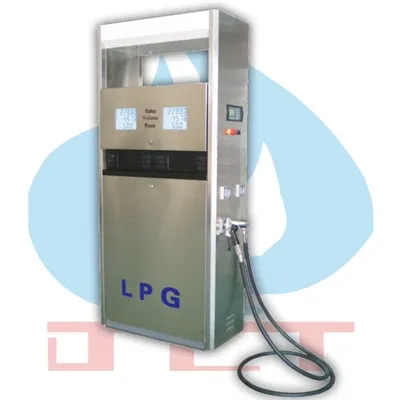
Now, let’s talk about the vehicle side of things. When you pull up to a CNG filling station, there’s a special hose that connects the filling station’s equipment to your vehicle’s fuel tank. The hose has a special connector that makes sure the gas flows smoothly and safely from the filling station to the tank. The filling process is a lot like filling up a regular gas tank, but it usually takes a little longer because the CNG has to be compressed and transferred at a specific rate.
Once the CNG is in your vehicle’s fuel tank, it needs to get to the engine. That’s where the pressure regulator comes in. The pressure regulator takes the high-pressure CNG from the fuel tank and reduces it to a lower pressure that the engine can use. It’s like a little control valve that makes sure the engine gets the right amount of gas at the right pressure.
From the pressure regulator, the CNG goes into the engine’s intake manifold. In the intake manifold, the CNG mixes with air to form a combustible mixture. When the engine’s spark plugs ignite this mixture, it creates a controlled explosion that powers the engine and makes your vehicle move.
One of the great things about CNG is that it burns more cleanly than gasoline or diesel. That means it produces fewer emissions, which is better for the environment. It also means that engines running on CNG generally last longer and require less maintenance.
But, like any technology, CNG equipment has its challenges. One of the biggest challenges is the infrastructure. Building CNG filling stations is more expensive than building regular gas stations because of all the specialized equipment needed. That’s why there aren’t as many CNG filling stations as there are gas stations, especially in some areas.
Another challenge is the storage of CNG. Since it needs to be compressed to a high pressure, the storage tanks are bigger and heavier than regular gasoline tanks. That can take up some space in the vehicle and reduce the vehicle’s payload capacity.
Despite these challenges, the demand for CNG equipment is growing. More and more people are realizing the benefits of using CNG as a fuel, and as the technology improves, the cost of the equipment is coming down.
If you’re in the market for CNG equipment, whether it’s for a filling station or for converting your vehicle to run on CNG, I’m here to help. I’ve got a wide range of high-quality CNG equipment that’s reliable and efficient. I can work with you to find the right solution for your needs, and I’ll provide you with all the support you need to get up and running.
So, if you’re interested in learning more about CNG equipment or if you’re ready to start a purchase and negotiation, just reach out. I’m always happy to have a chat and see how I can help you out.
LPG Equipment References
- "Compressed Natural Gas (CNG) Vehicle Technology" – U.S. Department of Energy
- "CNG Fuel Systems: A Comprehensive Guide" – Society of Automotive Engineers (SAE)
- "The Future of CNG in the Transportation Sector" – International Association for Natural Gas Vehicles (IANGV)
Xinxiang Jincheng Technology Co., Ltd.
As one of the most professional CNG equipment manufacturers in China, we’re featured by quality products and good service. Please rest assured to buy customized CNG equipment made in China here from our factory. For pricelist, contact us now.
Address: Industrial Park, Fengquan District, Xinxiang City, Henan Province, China
E-mail: cncd05@cryocontainer.com
WebSite: https://www.jinchengspecialgas.com/
