If you’re reading this, chances are you just got handed a brand-new high voltage diesel generator set from our shop, or maybe you’ve had one sitting in your facility for a few months and can’t quite remember the exact steps to start it without messing something up. Don’t worry—we see this all the time. High voltage generators aren’t like the portable ones you plug into your camper or a small tool shed; these big boys are built to power factories, data centers, and whole commercial buildings, so cutting corners here isn’t just bad—it’s dangerous. As the supplier that’s sold these units to warehouses, hospitals, and telecom companies across the country, I’ve watched too many techs skip a pre-start check and either trigger an alarm mid-start or worse, damage the alternator so bad it costs tens of thousands to fix. Let’s walk through this step-by-step, no fancy jargon, no overcomplicating things—just what you need to do to get that generator firing up right, every single time. High Voltage Diesel Generator Set

First off, before you even turn a key or hit a button, you need to do the pre-start walkaround. This is non-negotiable, I don’t care how quick you think you are. High voltage generators have a lot of moving parts and tight components, and a tiny oversight can derail everything. Let’s start with the fuel tank. Yeah, it seems obvious, but I’ve had clients show up at 2 a.m. when their grid went down and realize their tank was almost empty because they forgot to check it before scheduled testing. For high voltage units, you want at least 70% of the rated capacity in the tank—this prevents air from getting into the fuel lines once it’s running, which can cause stuttering or a failed start. Next, check the oil level. This isn’t the dipstick pull-and-go trick you do on your pickup. High voltage diesel generators have precision crankshafts and bearings, so oil level has to be exactly between the min and max marks on the sight glass, right when the unit is sitting level (pro tip: if it’s been running recently, let it cool down for 10 minutes before checking—hot oil can give a false high reading). Don’t overfill it, that’ll cause smoke and damage to the seals; don’t underfill it, and you’ll burn up the engine within 10 minutes. Then there’s the coolant. These big units run hot, so low coolant leads to overheating in seconds. Make sure the expansion tank is filled to the correct line, and double-check that there are no leaks around the hoses or radiator—small drips turn into big problems when you’re running a load. Last on the walkaround: the battery connections. High voltage generators use heavy-duty batteries, and corrosion on the terminals is the #1 reason for failed starts when it’s cold out. Give each terminal a little wiggle—if it’s loose or coated in white crust, tighten it up with a wrench and rub a little petroleum jelly on it to prevent future corrosion. If your unit has a fuel filter, take 2 seconds to glance at it too—water in the filter is a killer, especially for newer low-emission diesel engines. If you see any water or sediment, drain the filter before moving on. That whole walkaround should take 10 minutes max, and it’ll save you hours of headaches later.
Once the walkaround is done, it’s time to get to the control panel. This is the brain of the operation, and messing with the wrong switch here is how people burn out the alternator. First, you need to make sure the unit is in “Auto” or “Manual” mode, depending on what you’re using it for. If you’re doing a test start (not a grid outage), Manual is fine—Auto is for when you want it to kick on automatically if the grid goes down. But before you even press start, there’s a series of safety interlocks you have to clear. Most modern high voltage generators have sensors that will lock the start sequence if something’s off, so you can’t accidentally start it with low oil pressure or a door open on the control cabinet. First, locate the circuit breaker for the generator itself—this is a big, heavy switch usually on the front of the panel, labeled “Main Breaker.” It has to be in the “Off” position right now. Wait, that’s a common mistake: people leave the main breaker on from the last run, and when they start the generator, it tries to push power back into the grid, which can blow transformers or even hurt someone. Yeah, that’s a huge safety hazard, so always confirm the main breaker is off. Next, check the engine stop switch—make sure it’s in the “Run” position, not “Stop.” Then, you’ll see a set of alarm lights: low oil pressure, high coolant temp, over-speed, etc. All of these should be off, not lit up red. If any are on, go back to your pre-start checks and fix the issue before proceeding. If everything looks good, you can go ahead and turn the key (or press the start button, some newer units don’t have keys) to initiate the cranking sequence.
Now, when you hit start, don’t hold the button down for more than 10 seconds at a time. I see this all the time—techs holding the start button because they think it’ll turn over faster, but that’s bad for the starter motor. Starter motors are designed for short bursts, not constant cranking. If it doesn’t fire up after 10 seconds, let it rest for 30 seconds, then try again. Usually, a properly maintained high voltage generator will start on the second or third crank, max. If it’s cranking but not catching, go back to check the fuel supply—did you close a valve on the fuel line by accident, or is there air in the lines? If it fires up, great, now let it run at low speed for 3 to 5 minutes to warm up. Don’t jump straight to full load; that puts unnecessary stress on the engine and alternator, especially in cold weather. During that warm-up period, keep an eye on the gauges: oil pressure should climb to the normal range (usually 20 to 60 PSI, depending on the unit), coolant temp should creep up slowly, and all alarm lights should stay off. If oil pressure stays low for more than 30 seconds after start, shut it down immediately—low oil pressure means no lubrication, and you’ll wreck the engine in minutes. If coolant temp spikes to the red zone, also shut it down—most likely a leak, or a faulty thermostat that’s stuck closed.
Once it’s warmed up, you’re ready to sync it to the load, right? Wait, hold on—this is the part where a lot of people mess up when they’re hooking it up to a building or grid. High voltage generators produce power that has to match the grid’s frequency and voltage before you can connect it, otherwise you’ll cause a power surge that blows out all the equipment you’re trying to power. Let’s break that down. First, on the control panel, there’s a set of indicators for voltage and frequency. Your unit’s rated frequency is almost always 50 or 60 Hz, depending on where you’re located, and the voltage will be whatever your unit is rated for (common ones are 480V, 13.8kV, etc.). Adjust the engine’s speed slowly until the frequency matches the grid or load frequency—most panels have an adjustment knob for this, labeled “Speed Control.” Then check the voltage: use the fine adjustment (sometimes called the voltage trim) to get the generator’s voltage within 1% of the grid voltage. Once both are matched, most panels will have a “Sync” light that turns green when they’re in sync. Now, you can slowly close the main breaker to connect the generator to the load. Don’t flip it all the way on fast—take 2 to 3 seconds to close it, which lets the power transfer smoothly. If you’re testing the generator without a grid, you can hook up a load bank (we sell these, by the way) to simulate a real load, because running a high voltage generator at no load for long periods is bad for the engine—it causes carbon buildup on the cylinders.
Wait, what about if you’re in an emergency, like a grid outage, and you need to start it fast? We get that question all the time from our hospital and telecom clients who rely on these generators 24/7. In an emergency, you can skip the formal warm-up (but still do a quick check of oil level and battery terminals before hitting start). But once it’s running, get it connected to the load as quickly as possible, and after the emergency is over, do a full service: change the oil, filters, check coolant, and run a load test. Skipping post-emergency maintenance is how you end up with a generator that won’t start when you really need it next time.
Another thing: maintenance isn’t just something you do after a year. For high voltage generators, we recommend doing a pre-start check before every scheduled test, which is usually monthly for critical applications. Also, change the oil and filters every 200 hours of run time, or every 6 months, whichever comes first. Test the batteries every 3 months, because old batteries can fail in the middle of a cold snap when you need power most. We give all our clients a maintenance checklist when they buy a unit, but I’ll be honest—most of the time, people lose it, so this is a good refresher.
Now, a few safety notes I can’t stress enough. High voltage generators are called high voltage for a reason—they produce way more power than portable units, so never work on the panel or electrical connections while it’s running, or while it’s still connected to the grid. Always lock out the breaker if you’re doing any maintenance. Also, make sure the generator is installed in a well-ventilated area—exhaust fumes are deadly, and high voltage units burn a lot of fuel, so carbon monoxide buildup is a real risk. Never run one in a garage or inside a building, even with the doors open. If you’re not sure about any step, don’t guess. Call us, or a certified tech, because one wrong move can not only damage your generator but also cause serious injury.
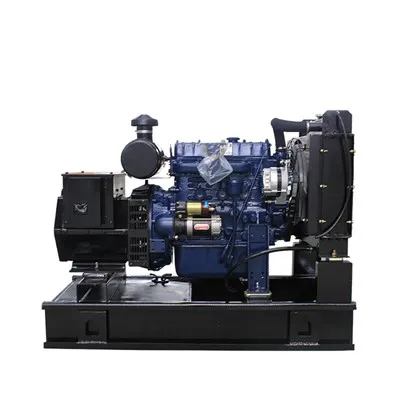
At the end of the day, starting a high voltage diesel generator set isn’t rocket science, but it does require attention to detail. The biggest mistake we see customers make is rushing through pre-start checks and cutting corners on safety, which leads to avoidable repairs or even accidents. We’ve been supplying these units for over a decade, and our whole team is here to help, whether you need a walkthrough for a test start, advice on maintenance, or support during an emergency outage. If you’re ready to purchase a high voltage generator, or have questions about the right unit for your facility, reach out to our team to talk through your needs and get a quote. We don’t do pushy sales stuff—we just want to make sure you have a generator that works when you need it, no stress.
Household Diesel Generator References:
- Cummins Inc. High Voltage Diesel Generator Operation and Maintenance Manual, 2022.
- International Organization for Standardization (ISO) 8528, Reciprocating Internal Combustion Engine Driven Alternating Current Generating Sets, 2019.
- Occupational Safety and Health Administration (OSHA) Electrical Safety Guidelines for Industrial Generator Use, 2021.
Jiangsu Kaichen Electric Power Equipment Co., Ltd.
We are one of the most professional high voltage diesel generator set manufacturers and suppliers in China, specialized in providing high quality diesel generators with reasonable price. We warmly welcome you to buy cheap high voltage diesel generator set from our factory. Contact us for pricelist and quotation.
Address: Dinghuo Industrial Park, Jiangdu District, Yangzhou, Jiangsu Province
E-mail: 19962469616@163.com
WebSite: https://www.jskaichen-power.com/
